For today's workforce, the traditional hour-long gym session is becoming a relic of the past. Between global project deadlines and back-to-back virtual meetings, the window for self-care has shrunk significantly. Yet, recent health data suggests that intensity and duration are less important than consistency. The most effective way to improve health is through micro-workouts and habit stacking, which allow for seamless fitness integration.
These beginner fitness habits for busy professionals prioritize small, frequent bursts of activity over rare, exhausting sessions. By focusing on "movement snacks"—short intervals of exercise lasting five to ten minutes—workers can maintain metabolic health without overhauling their schedules. This approach shifts the focus from finding time to utilizing the gaps that already exist within a typical corporate day.
The power of the minimum effective dose
Exercise science now confirms that the "minimum effective dose" of activity can trigger significant physiological benefits. For a professional starting from scratch, three ten-minute walks or bodyweight circuits daily can match the cardiovascular impact of a single thirty-minute block. This methodology removes the psychological barrier of not having enough time, making the first step toward health feel manageable.
This shift is particularly relevant as remote and hybrid work models continue to evolve. Without a commute, many professionals find themselves more sedentary than ever before. Introducing short bursts of movement—such as air squats during a kettle boil or lunges between calls—helps counteract the negative effects of prolonged sitting while keeping energy levels stable throughout the inevitable afternoon slump.
Using habit stacking to ensure consistency
Habit stacking is a psychological technique where you anchor a new behavior to an existing one. For example, doing ten calf raises while checking emails or stretching during every morning stand-up meeting. Because the trigger is already part of your routine, the new fitness habit requires less willpower to maintain. This strategy is a reliable cornerstone of sustainable lifestyle changes for high-performing individuals.
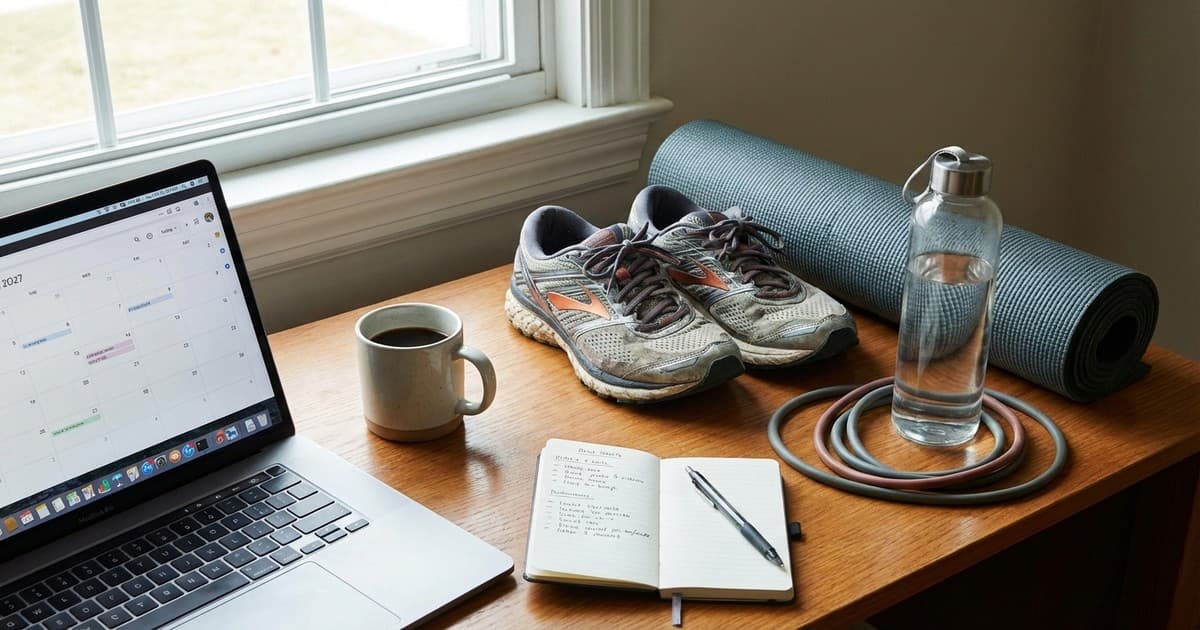
Consistency is also reinforced by reducing friction. Keeping a pair of running shoes visible by the desk or having a yoga mat permanently unrolled in the home office acts as a visual cue. When the environment is optimized for movement, the brain spends less energy debating whether to exercise. For the busy professional, the goal is to make the healthy choice the path of least resistance throughout the week.
Beyond the workout: sleep and recovery
Fitness is not solely defined by movement; recovery plays a critical role in long-term success. Professionals often sacrifice sleep to meet deadlines, but poor rest undermines physical progress and cognitive function. Prioritizing a consistent sleep schedule and hydration provides the physiological foundation needed for micro-workouts to be effective. Without this base, even the most efficient routine will eventually falter.
Transitioning to a healthier lifestyle does not require a complete identity shift or a massive time commitment. By embracing small, strategic changes, busy professionals can reclaim their physical well-being alongside their careers. The future of fitness lies in these manageable, daily victories that accumulate into significant long-term health gains. Start small, stay consistent, and let the results drive further motivation.