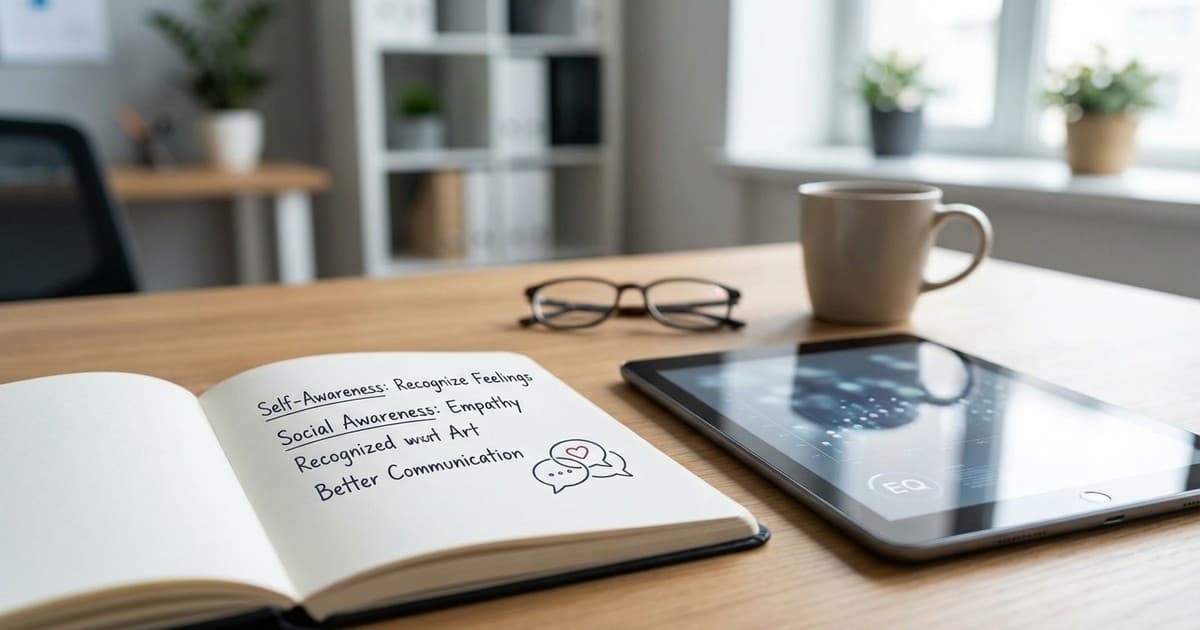
Emotional awareness has moved from a niche psychological concept to a cornerstone of modern social survival. As digital fatigue grows in early 2026, the ability to interpret internal states and external cues has become a vital differentiator in how we connect. By recognizing the physical and cognitive signals of emotion before they manifest as words, individuals can navigate complex social landscapes with significantly greater ease.
Experts agree that the primary benefit of this skill is its ability to diffuse tension before it escalates. Emotional awareness fosters psychological safety and empathy, allowing for more nuanced responses rather than reactive outbursts. This shift from reaction to reflection is the defining factor in whether a casual disagreement remains a minor hurdle or becomes a lasting rift in a professional or personal relationship.
The mechanics of active listening
Beyond internal regulation, this awareness transforms the quality of our listening. When we are attuned to our own feelings, we become more sensitive to the subtext in others' speech. We stop simply waiting for our turn to talk and begin to hear the intent behind the words. This level of presence builds trust quickly, making even brief interactions feel more meaningful and productive in a fast-paced, often distracted environment.
Managing conflict in high-stakes environments
In high-pressure settings, the impact of emotional awareness is most visible. By identifying feelings like frustration or anxiety as they arise, a person can employ self-regulation techniques to stay focused on the objective. This prevents the "emotional hijacking" that often derails negotiations. Instead of defending an ego, the aware individual looks for collaborative solutions that acknowledge the emotional needs of all involved parties.
Cultivating long-term social resilience
Long-term consistency in emotional awareness leads to social resilience. It allows individuals to set healthy boundaries without guilt and to offer support without burnout. As we move further into a year defined by rapid technological change, these human-centric skills remain the most effective tool for maintaining mental well-being. Practicing this awareness daily ensures that our social networks remain a source of strength rather than stress.
Ultimately, emotional awareness is not just about understanding feelings; it is a practical framework for better living. It sharpens our intuition and clarifies our communication, leading to a more harmonious daily experience. As the pace of life continues to accelerate, the decision to pause and check in with ourselves remains the most sophisticated way to improve every interaction we have with the world around us.