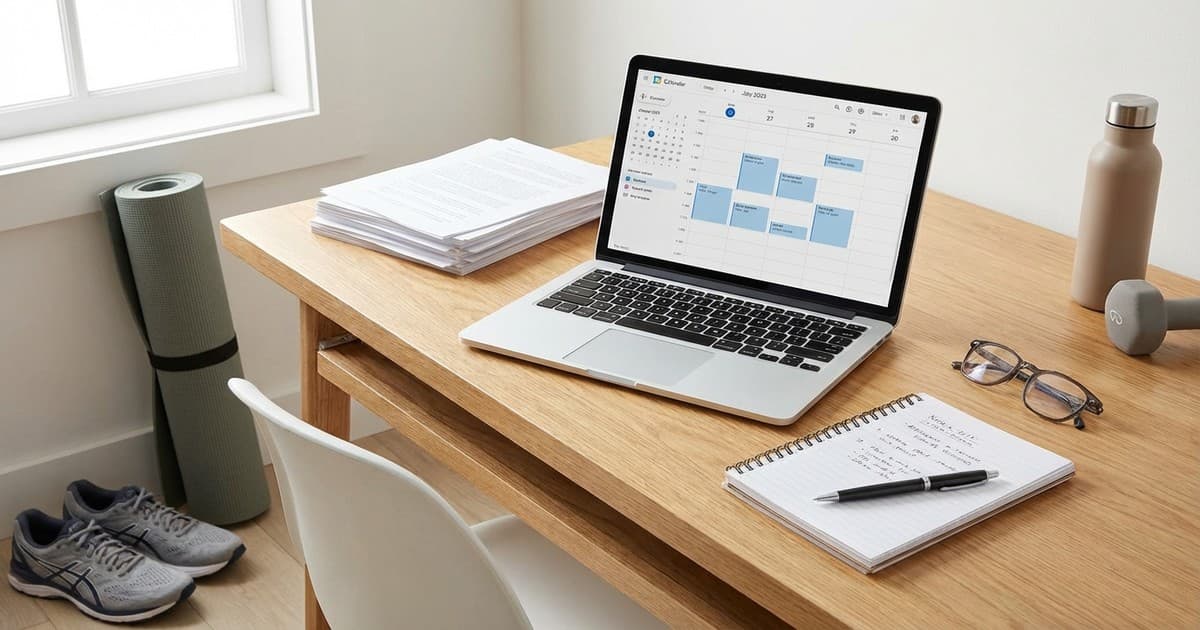
Many professionals in early 2026 find themselves trapped in a cycle of sedentary work followed by the guilt of a missed gym session. However, the latest medical research has shifted the focus from hour-long workouts to more manageable "movement snacks." To maintain physical activity for busy schedules, experts now recommend integrating short, high-intensity "movement snacks" lasting up to 10 minutes throughout the day.
This method has shown significantly higher adherence rates than traditional training, proving that consistency in short bursts is the most effective way to meet health goals. By treating fitness as a series of brief interruptions rather than a monolithic block of time, many can finally bridge the gap between their health ambitions and their demanding, high-pressure calendars.
The rise of the exercise snack
Exercise snacking, often defined as bursts of activity lasting five minutes or less, is the primary tool for the time-poor. Recent studies published in late 2025 confirm that three to four bouts of vigorous activity daily—such as stair climbing or rapid bodyweight squats—significantly boost cardiorespiratory fitness. These short intervals prevent the metabolic slowdown associated with prolonged sitting, making them a necessity for office workers.
Redefining the modern commute
Transforming the daily journey into a workout remains a powerful strategy for maintaining consistent movement. For those in hybrid work environments, the "fake commute" involves a brisk 15-minute walk before and after the workday. This practice not only aids physical health but also provides a vital mental boundary between professional and personal life. Even for commuters, getting off one stop early adds thousands of steps to a weekly total.
Optimizing the digital workspace
Workplace culture in 2026 increasingly supports "stealth" fitness through habit stacking. Professionals are now utilizing standing meetings and performing simple desk exercises, such as calf raises or seated leg extensions, during calls. These subtle changes ensure that physical activity is a constant thread throughout the day rather than an isolated task. By treating movement as a non-negotiable part of the daily workflow, psychological barriers are removed.
Prioritizing longevity and recovery
Longevity is the new ultimate performance goal, shifting the focus toward mobility and functional strength. Instead of chasing exhaustion, busy individuals are prioritizing exercises that support joint health and mitochondrial function. Low-impact movements like yoga or controlled stretching during brief breaks help manage stress levels while maintaining muscle elasticity. This sustainable approach ensures that physical activity remains a lifelong habit.
Consistency over intensity
Adopting a healthier lifestyle while managing a demanding career requires a fundamental shift in perspective. It is no longer about finding the perfect hour for the gym, but about seizing the small pockets of time that already exist in a calendar. By embracing micro-workouts and active habits, anyone can achieve significant health benefits. Ultimately, the best fitness plan is one that fits seamlessly into a reality where time is finite.